

Slot machines are among the most popular forms of gambling worldwide. While many players understand that winning is based largely on chance, fewer are aware of the psychological techniques that influence their gaming experience. One of the most studied phenomena in gambling psychology is the “near miss.”
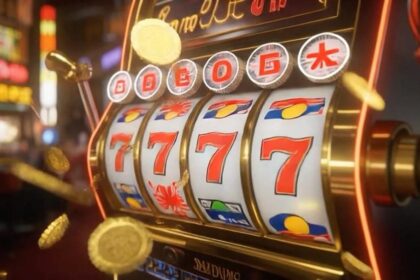
A near miss occurs when a slot machine outcome appears very close to a jackpot or winning combination but is ultimately a loss. For example, two jackpot symbols may align while the third stops just above or below the winning position. Although the result is technically no different from any other losing spin, near misses can have a powerful impact on player behavior.
What Is a Near Miss?
A near miss is an outcome that resembles a win without actually producing a reward. In slot machines, near misses often occur when symbols appear almost aligned on a payline or when a player comes close to triggering a bonus feature.
From a mathematical perspective, a near miss is simply a losing result. However, the human brain often interprets it differently, treating it as evidence that success may be close.
The Psychology Behind Near Misses
The Illusion of Progress
Humans are naturally motivated by signs of progress toward a goal. A near miss can create the feeling that a player is getting closer to a win, even though each spin is independent and unaffected by previous outcomes.
This perception can encourage continued play because the player believes a reward may be imminent.
Increased Motivation
Research in psychology suggests that near misses can be surprisingly motivating. In some cases, individuals report greater excitement after a near miss than after an ordinary loss.
The experience can trigger a desire to keep trying, similar to how people may feel encouraged after narrowly missing success in sports, academics, or other competitive activities.
Emotional Arousal
Near misses often generate strong emotional reactions. Players may feel excitement, anticipation, frustration, or determination. These emotions can make the gambling experience more engaging and memorable.
The emotional intensity associated with near misses helps explain why they attract significant attention from researchers.
The Brain and Near Misses
Neuroscientific studies have shown that near misses can activate some of the same brain regions involved in processing rewards. Areas associated with motivation, learning, and decision-making may respond to near misses in ways that resemble responses to actual wins.
This does not mean that near misses provide a reward. Instead, the brain may interpret the event as a signal that success was close, encouraging continued engagement with the activity.
Researchers have found that these neural responses can contribute to persistent gambling behavior, particularly among individuals who are more sensitive to reward-related cues.
Why Slot Machines Use Near Misses
Modern slot machines are carefully designed to create engaging experiences. Near misses can increase player attention and emotional involvement without requiring the machine to pay out winnings.
Importantly, the presence of near misses does not change the odds of winning. Random number generators determine outcomes independently, meaning that a near miss does not indicate that a jackpot is more likely on the next spin.
Nevertheless, the psychological impact of near misses can make players feel as though they are on the verge of success.
Common Misconceptions
“I Was So Close, I Must Be Due for a Win”
This belief is a form of the gambler’s fallacy. In properly regulated slot machines, each spin is independent. A near miss has no influence on future outcomes.
“The Machine Is About to Pay Out”
Many players assume that repeated near misses indicate an upcoming jackpot. In reality, near misses do not predict future results.
The machine’s outcome is determined by chance, not by how close previous spins appeared to be.
“Near Misses Mean I Have a Better Strategy”
Unlike games that involve skill, slot machines generally do not allow players to improve their chances through strategy. Near misses may create the impression of progress, but they do not reflect increasing skill or better decision-making.
Responsible Gambling and Awareness
Understanding the science of near misses can help individuals make more informed decisions about gambling. Recognizing that near misses are losses rather than indicators of future success may reduce the likelihood of chasing losses or developing unrealistic expectations.
Responsible gambling practices include setting spending limits, viewing gambling as entertainment rather than income, and taking breaks when emotions begin to influence decision-making.
Conclusion
Near misses are a fascinating example of how human psychology influences behavior. Although they are technically losses, near misses can create feelings of excitement, motivation, and anticipation that differ from ordinary losing outcomes. Research in psychology and neuroscience suggests that these effects arise because the brain often interprets near misses as signs of being close to success.
Understanding how near misses work can help players recognize the difference between perception and probability. While near misses may feel meaningful, they do not change the mathematical odds of winning and should not be viewed as predictors of future success.
Frequently Asked Questions (FAQs)
1. What is a near miss in a slot machine?
A near miss is a losing outcome that appears very close to a winning combination, such as missing a jackpot by one symbol.
2. Are near misses the same as wins?
No. Despite feeling different psychologically, near misses are still losses and provide no reward.
3. Why do near misses feel exciting?
Near misses can create the impression that success is close, triggering emotional and motivational responses in the brain.
4. Do near misses increase the chances of winning the next spin?
No. Each spin on a properly regulated slot machine is independent and unaffected by previous outcomes.
5. What is the gambler’s fallacy?
The gambler’s fallacy is the mistaken belief that past outcomes influence future random events, such as assuming a win is “due” after several losses.
6. Can near misses affect gambling behavior?
Yes. Research suggests that near misses can encourage continued play by increasing motivation and emotional engagement.
7. Are near misses intentionally designed into slot machines?
Slot machine designs may incorporate outcomes that appear close to wins because such experiences can increase player engagement, though actual outcomes remain governed by the machine’s programming and regulations.
8. How can players avoid being influenced by near misses?
Players can remind themselves that near misses are losses, understand that each spin is independent, and follow responsible gambling practices such as setting time and spending limits.