


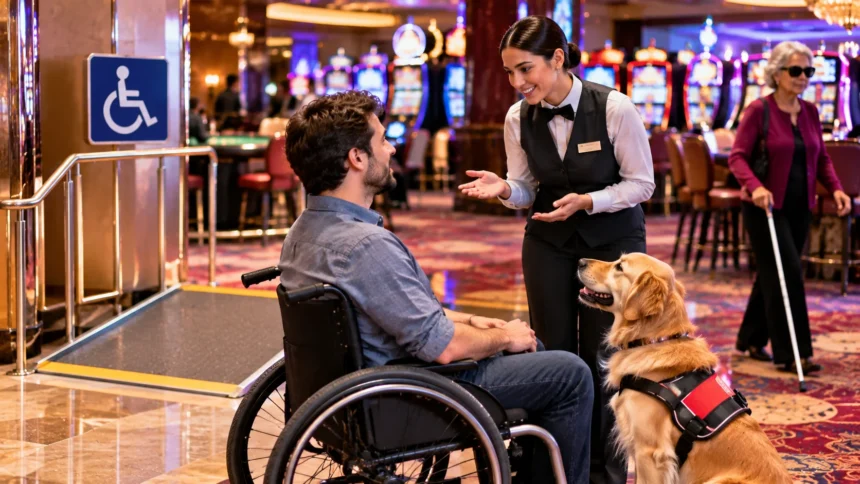
Casino accessibility policies are designed to ensure that people with different physical, sensory, and cognitive needs can access facilities, information, and services fairly. However, these policies are not always easy to understand. Differences between written rules, staff instructions, building features, and digital platforms can create confusion for visitors. Understanding where these problems begin helps explain why clear accessibility standards, consistent communication, and inclusive service practices are essential for casino operators.
What Are Casino Accessibility Policies?
Casino accessibility policies are guidelines that explain how gambling establishments provide access to facilities, services, and information for people with disabilities. These policies may address wheelchair access, accessible restrooms, communication assistance, digital accessibility, and customer support. Their purpose is to reduce unnecessary barriers and promote fair treatment. Requirements vary according to the laws and regulations governing each location.
Physical accessibility is one important part of these policies because casinos often operate within large buildings. Visitors may need accessible entrances, elevators, suitable pathways, and properly designed seating areas. Clear signs and safe routes also help people navigate unfamiliar environments. When these features are missing or poorly maintained, customers may experience difficulties accessing services that others can use easily.
Accessibility policies also extend beyond physical building features and include communication and digital services. For example, establishments may need to provide information in accessible formats or support customers with hearing or visual impairments. Staff training helps employees understand how to respond appropriately to individual needs. Effective policies should explain available accommodations clearly rather than relying on vague promises.
Why Casino Accessibility Policies Often Create Confusion
Confusion frequently begins when accessibility policies use general language without explaining how accommodations work. A casino website might describe its facilities as accessible while providing little information about specific entrances, restrooms, or assistance services. Visitors are then left uncertain about what to expect. Clear explanations are especially important when customers need to plan around particular accessibility requirements.
Another source of confusion is the difference between written policies and actual conditions inside a facility. A building may advertise accessible pathways, but temporary furniture, maintenance work, or crowded areas can create obstacles. Employees may also interpret accessibility procedures differently. These inconsistencies make it difficult for visitors to understand which services are reliably available.
Regulatory differences can further complicate the situation, particularly for businesses operating across multiple jurisdictions. Accessibility obligations may depend on local disability laws, building standards, licensing requirements, and applicable digital regulations. A policy suitable for one location may not satisfy requirements elsewhere. Businesses should identify their specific obligations and communicate them in language customers can easily understand.
Physical Accessibility Challenges Inside Casinos
Physical accessibility involves more than providing a wheelchair ramp near the main entrance. Casinos frequently contain extensive gaming floors, restaurants, entertainment areas, hotels, and other connected facilities. Visitors with mobility limitations need suitable routes between these spaces. Elevators, accessible restrooms, appropriate doorway widths, and unobstructed walkways all contribute to a more inclusive environment.
Large casino layouts can introduce challenges because visitors may need to travel considerable distances between important services. Poorly positioned furniture, narrow passages, or inaccessible counters can limit independent movement. Directional signs should clearly identify accessible routes and nearby facilities. When layouts change, operators should ensure that accessibility information remains accurate and reflects the current environment.
Emergency accessibility is another important issue that may receive insufficient attention. Visitors with disabilities should have access to understandable evacuation information and appropriate assistance procedures. Staff members need training to respond safely without making assumptions about individual mobility or communication needs. Regular facility inspections and emergency planning help identify barriers before they create serious difficulties.
Digital Accessibility and Online Casino Information
Digital accessibility concerns how easily people with disabilities can use casino websites, mobile applications, and electronic services. Common barriers include unreadable text, poor color contrast, inaccessible forms, and navigation that depends entirely on a mouse. These problems can prevent visitors from finding important policies or contacting customer support. Accessible design helps make information available to a wider audience.
People who use screen readers or keyboard navigation may encounter difficulties when websites lack appropriate technical structure. Missing image descriptions, confusing headings, and poorly labeled buttons can make ordinary tasks unnecessarily complicated. Established accessibility standards, including the Web Content Accessibility Guidelines, provide useful design principles. Businesses should test digital services with assistive technologies and involve users with disabilities.
Casino websites may also publish accessibility statements without providing meaningful information about current limitations. A general statement does not explain whether specific forms, documents, or support channels are accessible. Visitors benefit from clear contact options and straightforward methods for reporting difficulties. Digital accessibility requires ongoing testing, maintenance, and improvement rather than a single website update.
Communication Barriers and Customer Support Problems
Communication accessibility is essential because visitors may need information presented in different formats. People with hearing impairments, visual impairments, or communication disabilities can experience barriers when services depend on a single communication method. Written instructions, accessible digital information, and suitable assistance options can improve understanding. Providing choices helps customers communicate their needs without unnecessary difficulty.
Confusion often develops when customer service employees are unfamiliar with available accessibility accommodations. One representative may describe a particular service as available, while another provides conflicting information. Visitors may have to repeat personal details or explain their needs several times. Clear internal procedures and consistent staff training help reduce these frustrating experiences.
Accessible communication also involves using understandable language when explaining policies, restrictions, and available services. Complicated terminology can make information difficult to follow, even when the underlying policy is appropriate. Businesses should provide direct answers and avoid making assumptions about customers’ abilities. Respectful communication allows visitors to make informed decisions while maintaining their privacy and independence.
Staff Training and Accessibility Policy Enforcement
Even carefully written accessibility policies can fail when employees do not understand how to apply them. Staff members may be responsible for helping customers navigate facilities, explaining available accommodations, or responding to accessibility complaints. Without sufficient training, employees may provide inconsistent answers. Clear instructions help ensure that customer experiences do not depend entirely on which representative happens to be available.
Training should address practical accessibility situations rather than focusing only on general awareness. Employees benefit from understanding how to communicate respectfully, recognize common barriers, and request appropriate assistance. They should also know when to involve supervisors or designated accessibility personnel. Staff should avoid making unnecessary assumptions about a visitor’s disability or preferred form of support.
Policy enforcement requires ongoing supervision because accessibility responsibilities can change as facilities and services develop. Managers should review complaints, identify recurring difficulties, and address problems through documented procedures. Regular training updates can help employees understand changes in applicable requirements. Consistent enforcement makes accessibility policies more dependable and demonstrates that inclusive service is an operational responsibility.
Accessibility Rights and Regulatory Differences
Accessibility rights are shaped by the legal framework governing each casino’s location and activities. Different jurisdictions may impose obligations concerning physical access, employment practices, communication support, and digital services. Some requirements come from disability discrimination laws, while others involve building codes or industry regulations. Understanding these distinctions is important for businesses developing accurate accessibility policies.
In the United States, the Americans with Disabilities Act establishes important accessibility requirements for many places of public accommodation. Other countries and regions use their own legal frameworks to address disability access and equal treatment. The specific obligations of an individual casino depend on applicable law and circumstances. Operators should seek qualified guidance rather than assuming one universal standard applies everywhere.
Legal compliance and practical accessibility are related, but they are not always identical. A facility may satisfy certain technical requirements while still presenting confusing information or inconvenient service procedures. Regular accessibility reviews help identify experiences that deserve improvement beyond minimum standards. Businesses should consider both their legal responsibilities and the practical needs of people using their facilities.
How Inconsistent Accessibility Information Affects Visitors
Inconsistent information can make planning a casino visit difficult for people who require particular accommodations. A customer may contact the property to confirm an accessible entrance, only to receive different instructions upon arrival. These situations can cause delays, frustration, and unnecessary uncertainty. Reliable information helps visitors make decisions about transportation, timing, and available support before traveling.
Accessibility confusion may also affect visitors’ confidence in an establishment’s overall customer service. When advertised features are unavailable, people may question whether other important information is accurate. Repeated difficulties can discourage customers from using a facility or attending an event. Transparent communication helps businesses establish realistic expectations and respond more effectively when problems arise.
The effects can extend beyond individual visitors to family members, companions, and support workers. People traveling together may need to adjust plans when an accessible route or service is unavailable. Providing accurate information in advance can reduce these disruptions. Clear policies support independent decision-making and help visitors understand which facilities and accommodations are available.
Common Mistakes in Casino Accessibility Policies
One common mistake is using broad accessibility statements without providing specific details about available accommodations. Phrases such as fully accessible may sound reassuring but can leave important questions unanswered. Visitors often need practical information about entrances, restrooms, seating, assistance, and accessible transportation connections. Specific descriptions are generally more useful than unsupported claims about overall accessibility.
Another mistake is failing to update policies when facilities or services change. Renovations, temporary closures, new technology, and staffing changes can affect how accessibility arrangements operate. Outdated website information may lead visitors to expect features that are temporarily unavailable. Regular reviews help ensure that published information accurately reflects current conditions and available alternatives.
Businesses may also overlook feedback from people with disabilities when evaluating accessibility performance. Internal inspections are useful, but they may not reveal every difficulty encountered during real visits. Structured feedback and appropriate user testing can identify overlooked problems. Listening to customers and responding to recurring concerns makes accessibility improvements more practical and relevant.
How Casinos Can Improve Accessibility Transparency
Improving accessibility transparency begins with creating policies that explain accommodations in clear, practical language. Businesses should identify accessible entrances, available assistance, relevant facilities, and appropriate contact methods. Information should be easy to find before a visitor arrives. Avoiding vague statements helps customers understand what support is available and whether additional arrangements are necessary.
Another important step is maintaining consistent information across websites, customer support channels, and on-site services. Employees should have access to current accessibility guidance and know how to answer common questions. Changes affecting accessible routes or facilities should be communicated promptly. Consistent messaging reduces confusion and helps visitors plan their experience with greater confidence.
Regular audits can also strengthen accessibility performance by revealing physical, digital, and communication barriers. Businesses should review facilities, test online information, and evaluate feedback from visitors with different needs. Identified problems should be addressed through a practical improvement plan. Clear accountability makes it easier to track progress and demonstrate a genuine commitment to accessible service.
Why Clear Accessibility Policies Matter for the Casino Industry
Clear accessibility policies help create environments where visitors can understand available services and navigate facilities more confidently. They also support employees by explaining how accessibility responsibilities should be handled. When expectations are clearly documented, misunderstandings become easier to prevent. This contributes to a more consistent experience across different departments and customer service channels.
For casino operators, accessibility should be considered during facility planning, website development, staff training, and daily operations. Treating accessibility as an ongoing responsibility is more effective than addressing problems only after complaints occur. Inclusive planning can reduce avoidable barriers and improve service quality. It also helps organizations respond appropriately to changing customer needs and regulatory expectations.
The wider hospitality industry can benefit from recognizing accessibility as a fundamental part of customer experience. Hotels, restaurants, entertainment venues, and casino facilities often share similar challenges involving navigation, communication, and digital information. Clear procedures and continuous improvement can support more inclusive environments. Meaningful accessibility depends on practical action rather than promotional statements alone.
Conclusion
Casino accessibility policies are intended to support fair access, but confusion can arise when information is incomplete, inconsistent, or difficult to understand. Physical barriers, inaccessible websites, unclear communication, and varying regulatory requirements can all contribute to these problems. Visitors benefit from knowing what accommodations are available before arriving. Clear policies reduce uncertainty and support more dependable customer experiences.
Businesses can address many accessibility challenges through better information, regular inspections, and appropriate employee training. Maintaining accurate descriptions of facilities and services helps customers make informed decisions. Feedback from people with disabilities can identify problems that internal reviews overlook. Consistent procedures also help employees respond to accessibility requests with greater confidence and professionalism.
The most effective accessibility policies combine legal compliance with practical attention to individual needs. Casino operators should view accessibility as an ongoing operational responsibility rather than a one-time requirement. Transparent communication, inclusive design, and regular improvements create more dependable services. Understanding where confusion starts is an important first step toward making casino facilities and information easier for everyone to access.
FAQs
What are casino accessibility policies?
Casino accessibility policies explain how establishments provide access to facilities, information, and services for people with disabilities. They may cover physical accessibility, communication assistance, digital platforms, and procedures for requesting accommodations.
Why do casino accessibility policies cause confusion?
Confusion often results from vague policy wording, outdated facility information, inconsistent staff guidance, and differences in local regulations. These problems can make it difficult for visitors to understand which accessibility services are available.
Are casinos required to provide wheelchair accessibility?
Many jurisdictions require qualifying casino facilities to meet applicable disability access and building standards. Specific obligations depend on local laws, building characteristics, and circumstances, so requirements should be verified for each location.
Do casino accessibility policies apply to websites?
Digital accessibility obligations vary by jurisdiction and the services offered. Accessible websites should support features such as screen readers, keyboard navigation, readable content, and clearly labeled forms to reduce barriers for users.
How can casinos improve accessibility for visitors?
Casinos can improve accessibility by maintaining clear policies, removing physical barriers, training employees, testing digital services, and responding to customer feedback. Regular reviews help ensure that accommodations remain accurate and effective.