


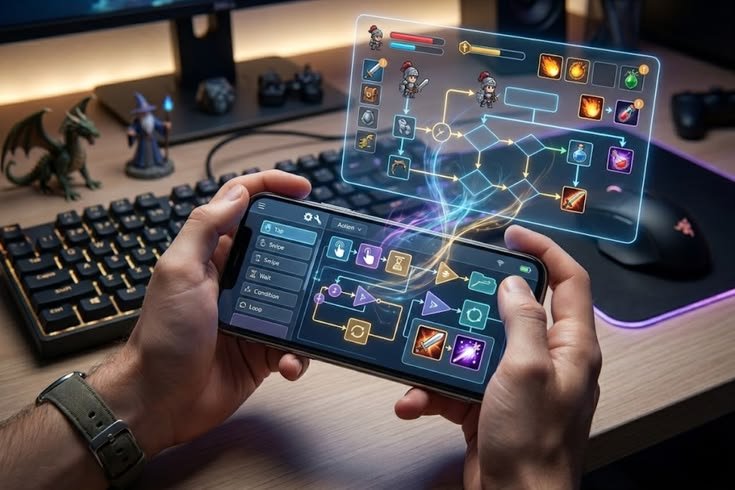
Introduction to Mobile Gaming
Mobile gaming has emerged as a significant segment of the larger gaming industry, transforming the landscape of entertainment profoundly. With the proliferation of smartphones and tablets, mobile games have become accessible to a vast audience, surpassing traditional gaming platforms like consoles and personal computers. The evolution of mobile gaming commenced in the late 1990s with simple games such as Snake, which was pre-installed on Nokia phones. These early games laid the groundwork for the sophisticated mobile gaming landscape we see today.
As mobile technology advanced, so too did the capabilities of mobile games. The introduction of touch screens and improved graphics in smartphones allowed for richer gaming experiences. Games transitioned from simple 2D graphics to immersive 3D environments, appealing to a broader demographic. Furthermore, mobile gaming applications began incorporating social elements, enabling players to engage with friends through competitive and cooperative gameplay.
The launch of app stores in the late 2000s represented a major turning point for mobile gaming. Platforms like Apple’s App Store and Google Play provided developers with the tools to distribute their games directly to consumers, fostering a vibrant ecosystem of indie and major game publishers alike. This democratization of game development led to an explosion in the variety and quality of mobile games available, ranging from casual puzzles to complex strategic challenges.
Looking back at the trajectory of mobile gaming, the industry has not only adapted to technological advancements but has also shaped consumer behavior and gaming habits. Mobile gaming has become an integral part of daily life for millions, providing entertainment on-the-go and connecting players worldwide. As we delve deeper into the details of mobile gaming’s evolution, it becomes evident that this segment continues to redefine the gaming experience for diverse audiences.
The Impact of Mobile Apps on Game Accessibility
The advent of mobile apps has significantly transformed the gaming landscape, making gaming more accessible than ever before. With the proliferation of smartphones, players can now enjoy a diverse range of games on the go, which eliminates the barrier of needing a dedicated gaming console or PC. This convenience has led to a surge in the number of players engaging with various gaming genres, from casual puzzle games to more intricate role-playing experiences.
Moreover, the affordability of mobile games contributes to enhanced accessibility. Unlike traditional gaming consoles, which often require a substantial upfront investment, many mobile games are either free-to-play with optional in-app purchases or low-cost titles. This pricing model democratizes gaming, allowing individuals from various economic backgrounds to experience gaming without significant financial commitment. Consequently, mobile apps have opened the doors for a broader demographic—enabling not only avid gamers but also casual users, children, and older adults to participate in gaming.
Additionally, mobile apps have incorporated user-friendly interfaces and simple gameplay mechanics that cater to all skill levels. As a result, individuals who may have previously felt intimidated by complex gaming systems find mobile gaming to be more welcoming and engaging. This increased inclusivity also fosters community interaction, as players can easily share experiences and connect with others, further bridging the gap between different user groups.
In summary, the impact of mobile apps on game accessibility is profound and multifaceted. By providing a convenient, affordable, and inclusive gaming solution, mobile applications have not only broadened the gaming audience but have also enriched the gaming experience for countless individuals worldwide.
Free-to-Play Model and In-App Purchases
Since the advent of mobile gaming, the revenue models employed by developers have undergone a significant transformation. The introduction of the free-to-play model has become a cornerstone of the mobile gaming industry, making games accessible to a broader audience. Unlike traditional gaming models that typically require upfront purchases, free-to-play games allow users to download and play without any initial financial commitment. This accessibility has proven to be a key factor in attracting millions of players worldwide.
At the heart of the free-to-play model is the mechanism of in-app purchases. These purchases enable gamers to acquire additional features, virtual currency, or cosmetic items that enhance the gaming experience. This monetization strategy not only allows developers to generate revenue after the game has been released but also cultivates a continual relationship with players. Gamers can enjoy the core elements of the game for free, but they have the option to pay for enhancements that can improve their gameplay. This model has led to the emergence of “whales,” or high-spending players, who contribute a significant portion of the revenue.
The implications of this model have varied for both gamers and developers. For players, while the free-to-play model offers the advantage of risking no initial investment, it can lead to a frustrating experience due to paywalls or competitive advantages given to paying users. Furthermore, the pressure to make in-app purchases can sometimes detract from the enjoyment of the game itself. On the other hand, for developers, the free-to-play and in-app purchases model has opened up new revenue streams and offers opportunities for ongoing engagement with their user base. However, it also necessitates a careful balancing act to maintain player satisfaction without compromising potential revenue.
Social Interaction and Mobile Gaming Communities
The advent of mobile apps has significantly transformed the landscape of social interaction within the gaming industry. Unlike traditional gaming platforms, mobile games facilitate interconnectedness among players, fostering vibrant communities that transcend geographical barriers. The core feature enabling this is multiplayer functionality, which allows gamers to engage in cooperative and competitive gameplay in real-time.
Mobile apps such as Fortnite and Among Us have integrated social features that enhance user interaction, pushing the boundaries of how players communicate and collaborate. Players can team up with friends or join random teams, participate in guilds, and partake in global tournaments, enriching the gaming experience. Moreover, voice and text chat options enable seamless communication, making it easier for players to strategize during gameplay or simply chat in between matches.
In addition to in-game interactions, social media integration within mobile gaming platforms has further revolutionized how gamers connect. Mobile apps allow users to share achievements, stream gameplay, and promote their gaming experiences directly on platforms such as Facebook, Twitter, and Twitch. This visibility not only attracts new players but also strengthens existing community ties, creating a shared culture around particular games. As players post highlights or in-game moments, an inclusive community ethos emerges, positing mobile gaming as a social experience rather than a solitary activity.
Networking and community-building have become easier through forums and groups centered around mobile games. These platforms encourage discussions about strategies, updates, and fellow gamers’ insights, enhancing player engagement. Ultimately, the integration of social elements within mobile gaming apps has redefined the gaming experience, creating a more interconnected and communal atmosphere that mirrors contemporary social media dynamics.
Graphic and Gameplay Innovations in Mobile Games
In recent years, the mobile gaming landscape has witnessed significant advancements in graphics and gameplay mechanics. These innovations have fundamentally transformed the user experience, making mobile games more engaging and visually appealing than ever before. One of the most notable improvements is in mobile graphics technology, which now rivals that of traditional console games. Enhanced processors and powerful GPUs in smartphones enable developers to create visually stunning environments, intricate character designs, and lifelike animations that contribute to an immersive gaming experience.
Touch controls have also evolved, allowing for more intuitive gameplay. The introduction of multi-touch capabilities permits players to engage in complex actions with simple gestures, enhancing the overall fluidity of gameplay. For example, in action games, players can perform combinations of attacks and dodges seamlessly, resulting in a more satisfying experience. Furthermore, developers have started incorporating haptic feedback technology, which gives players tactile responses to their actions, adding another layer of realism and engagement.
Augmented reality (AR) has emerged as a groundbreaking innovation, merging the virtual and physical worlds. Games like Pokémon GO have demonstrated the potential of AR in mobile gaming, allowing players to interact with virtual elements in real-world settings. This technology not only enhances gameplay but also encourages social interaction and outdoor activity, enriching the gaming experience.
Overall, the advancements in graphic fidelity, touch controls, and augmented reality have significantly enhanced the quality of mobile games. These innovations have not only attracted a broader audience but have also paved the way for more sophisticated gameplay mechanics that contribute to the dynamic evolution of the gaming industry. As technology continues to develop, mobile gaming will likely see even more remarkable advancements that further enrich player engagement.
Influence of Mobile Games on Traditional Gaming
In recent years, the mobile gaming sector has profoundly influenced traditional gaming formats such as consoles and personal computers. With the ubiquitous nature of smartphones and tablets, mobile games have initiated a paradigm shift, introducing a wider audience to the gaming world. This accessibility not only allows for a more diverse player base but also fosters the exchange of innovative ideas between mobile and traditional gaming environments.
One of the most notable impacts of mobile gaming on traditional formats is the incorporation of simplified gameplay mechanics. Games like Flappy Bird and Candy Crush Saga have demonstrated that engaging, short-session gameplay can be just as compelling as complex console or PC titles. This trend has prompted traditional game developers to consider shorter, more accessible experiences that cater to the evolving preferences of players who may not have the time to commit to extended gaming sessions.
Furthermore, the monetization strategies pioneered by mobile games are increasingly being adopted by console and PC titles. Free-to-play models, which often utilize in-game purchases and ads, have gained traction among traditional games, significantly altering revenue paradigms. The success of such strategies has encouraged developers to experiment with similar mechanics, aiming to enhance player engagement while maximizing financial gains.
The cross-pollination of ideas and mechanics between mobile and traditional gaming realms has led to the emergence of hybrids. Games such as Fortnite exemplify this trend, as they embrace both mobile accessibility and the depth typically associated with console gaming. This synergy not only enriches the player experience but also helps the gaming industry as a whole to cultivate a more interconnected ecosystem.
In summary, mobile gaming is reshaping the landscape of traditional gaming formats by introducing accessible gameplay, innovative monetization methods, and hybrid experiences that unify diverse gaming communities.
The Role of Major Gaming Companies in the Mobile Space
In the rapidly evolving landscape of mobile gaming, key players have emerged that have significantly influenced the direction and development of this industry. Mainstream gaming companies such as Electronic Arts (EA), Activision Blizzard, and Nintendo have established a formidable presence in the mobile arena, showing an impressive ability to adapt their strategies and offerings to suit mobile platforms. The proliferation of smartphones coupled with the advent of high-speed mobile internet revolutionized how games are developed and consumed, prompting these companies to enhance their focus on mobile gaming solutions.
Mobile gaming has not only diversified the gaming experience but also expanded the target audience. The aforementioned companies have shifted their efforts from traditional console gaming to mobile-friendly formats, providing gamers with access to their favorite titles on the go. For example, EA has successfully transitioned its sports franchises such as FIFA and Madden to mobile devices, utilizing strong marketing strategies and user engagement to captivate players. Similarly, Activision Blizzard’s “Call of Duty: Mobile” exemplifies how major gaming companies can leverage beloved franchises to captivate the growing mobile user base.
Moreover, investment through acquisitions has played a vital role in accelerating growth in the mobile gaming sector. Companies like Zynga have been acquired by larger firms seeking to tap into their established mobile expertise. These acquisitions enable larger entities to integrate proven technologies and creative talents, driving innovation in mobile game development. The influx of investment capital has also led to the emergence of new gaming studios specializing in mobile experiences, further enriching the landscape.
In conclusion, the influence of major gaming companies on the mobile gaming industry cannot be overstated. Through adaptation, strategic acquisitions, and consistent innovation, these firms have positioned themselves at the forefront of the mobile gaming revolution, redefining the nature of gaming as it continues to evolve in a mobile-centric world.
Future Trends in Mobile Gaming
The landscape of mobile gaming is continuously evolving, driven by rapid advancements in technology and shifting consumer habits. As we look toward the future, several key trends are anticipated to influence mobile gaming significantly. One of the most notable trends is the rise of cloud gaming. By eliminating the need for powerful hardware, cloud gaming allows players to stream high-quality games directly to their devices. This means that mobile gamers can access demanding titles without requiring high-end phones or tablets, thus expanding the potential gaming audience.
Furthermore, the rollout of 5G networks is poised to revolutionize the mobile gaming experience. With faster data speeds and reduced latency, 5G will facilitate smoother gameplay, enhance graphics quality, and enable more immersive multiplayer experiences. As game developers harness these capabilities, players can expect more dynamic and interactive gaming environments, further merging the lines between mobile and console gaming.
Artificial Intelligence (AI) is also set to play a pivotal role in the future of mobile gaming. Through AI integration, developers can create more personalized gaming experiences, adapting to players’ preferences and behaviors in real time. This could lead to advanced in-game tutorials, smarter NPC interactions, and adaptive difficulty levels that ensure each player has a unique gaming experience. Moreover, AI can enhance game development processes, optimizing design and function, thereby allowing for more innovative game concepts to emerge.
In conclusion, with the confluence of cloud gaming, the advent of 5G technology, and the deepening integration of AI, the mobile gaming industry is on the verge of transformative changes. Players can look forward to an engaging and enriched gaming experience, while developers will find new opportunities to push creative boundaries in game design.
Conclusion: The Lasting Legacy of Mobile Gaming
The advent of mobile apps has profoundly transformed the gaming industry, reshaping not only the way games are played but also how they are perceived culturally. With the rise of smartphones and tablets, gaming has transitioned from a predominantly stationary activity to one that allows players to engage anytime and anywhere. This mobility has made gaming more accessible than ever, with millions of users around the globe able to indulge in casual and competitive gaming experiences alike.
Furthermore, mobile gaming has diversified the types of games available, leading to the emergence of new genres and innovative gameplay mechanics designed specifically for touch interfaces. This has fostered an environment where indie developers can thrive, often leading to the creation of unique and creative titles that might not have seen the light of day in traditional gaming formats. Consequently, mobile apps have not only democratized gaming but have also contributed to its cultural relevance through social gaming features that encourage collaboration and competition among players.
The impact of mobile applications on gaming extends into the economic realm as well. The global mobile gaming market has grown exponentially, generating significant revenue through in-app purchases and advertising, thereby attracting substantial investments and fostering advancements in technology. This financial growth signifies a shift in focus towards mobile platforms, prompting traditional gaming companies to adapt their strategies to meet evolving consumer preferences.
Looking ahead, the future trajectory of the gaming industry appears inextricably linked to the development of mobile apps. Continuous advancements in technology, such as augmented and virtual reality integrations, promise to enrich the gaming experience further. As mobile gaming continues to evolve, it is clear that the legacy of mobile applications will continue to shape the industry landscape, influencing gaming culture and engagement for years to come.